Inspired by Make Noise GTE and somewhat Doepfer A-167 though with my own personal twists;
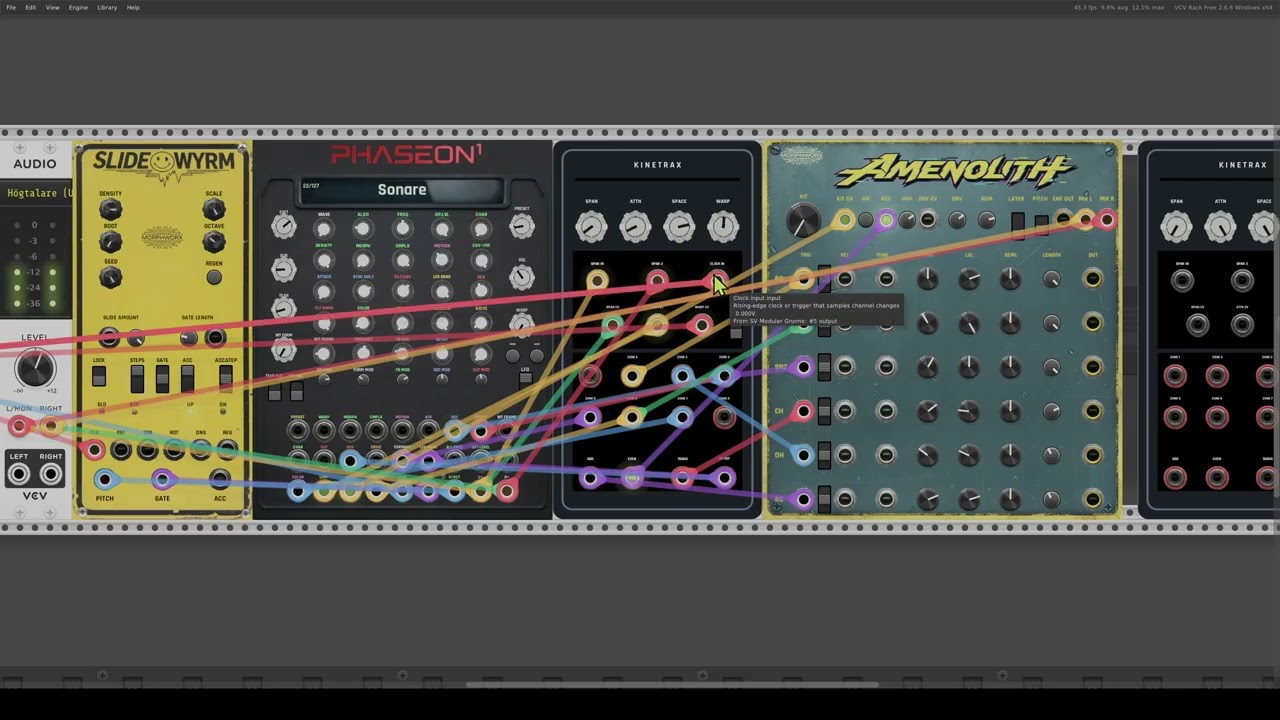
KINETRAX is a 8-zone motion analyzer for modular signals. It converts where a signal is and how it moves into gates, pulses, and CV. It is especially useful for turning simple modulation into rhythms, logic patterns, stepped control, and movement-sensitive events.
So in this demo its just Phaseon1 into Kinetrax, Kinetrax gate outs into Amenolith. Some gates and the CV out from Kinetrax goes to some of the various ins on Phaseon1.
Some changes from MN GTE:
I have added a CV out (it has a switch to select 3 kinds of CV out; Index for stepped zone position, Slew for a smoothed version of that position, Flux for a decaying activity envelope based on transitions. KINETRAX adds Span 2 and Warp, which means a second signal can bend the boundary crossings of the first one. That is the biggest functional expansion.
MN GTE (and Doepfer A-167) is analog, i am not claiming mine is better in any way btw, i have not even used these, i only researched them online. So it is its own thing but draws heavy inspiration from them.
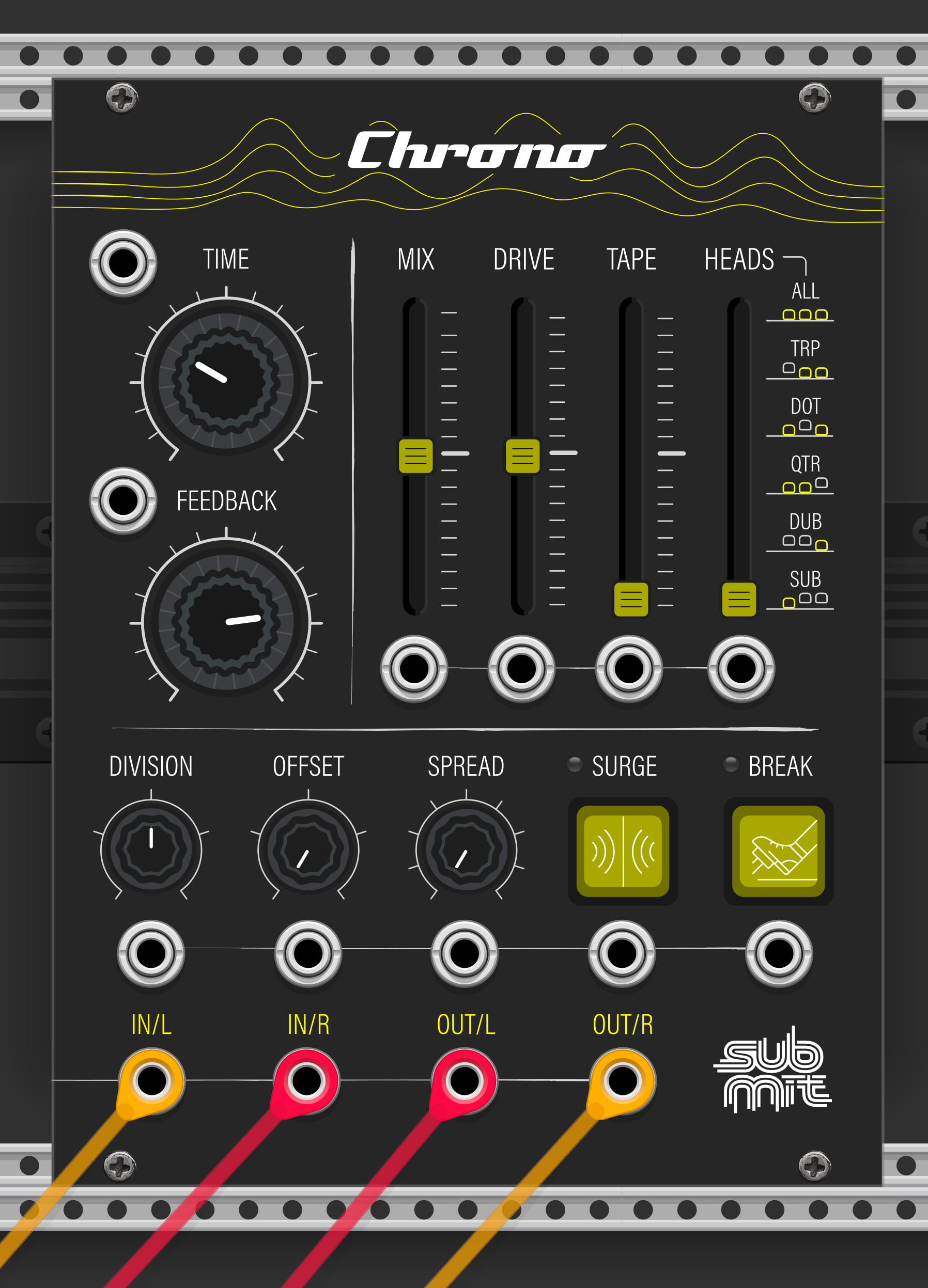
After finishing the first beta of Drift, I couldn’t stop… so I started working on the next one: Chrono.
Chrono is a delay, but not a clean or clinical one. The goal is to make something that feels alive — more like a tape system than a typical digital delay. Imperfect, moving, and sometimes a bit unpredictable.
Right now I’m mainly focusing on how it feels to play:
tight clock sync, multiple “tape heads” for rhythm and spacing, and a few performance controls for those dub-style moments.
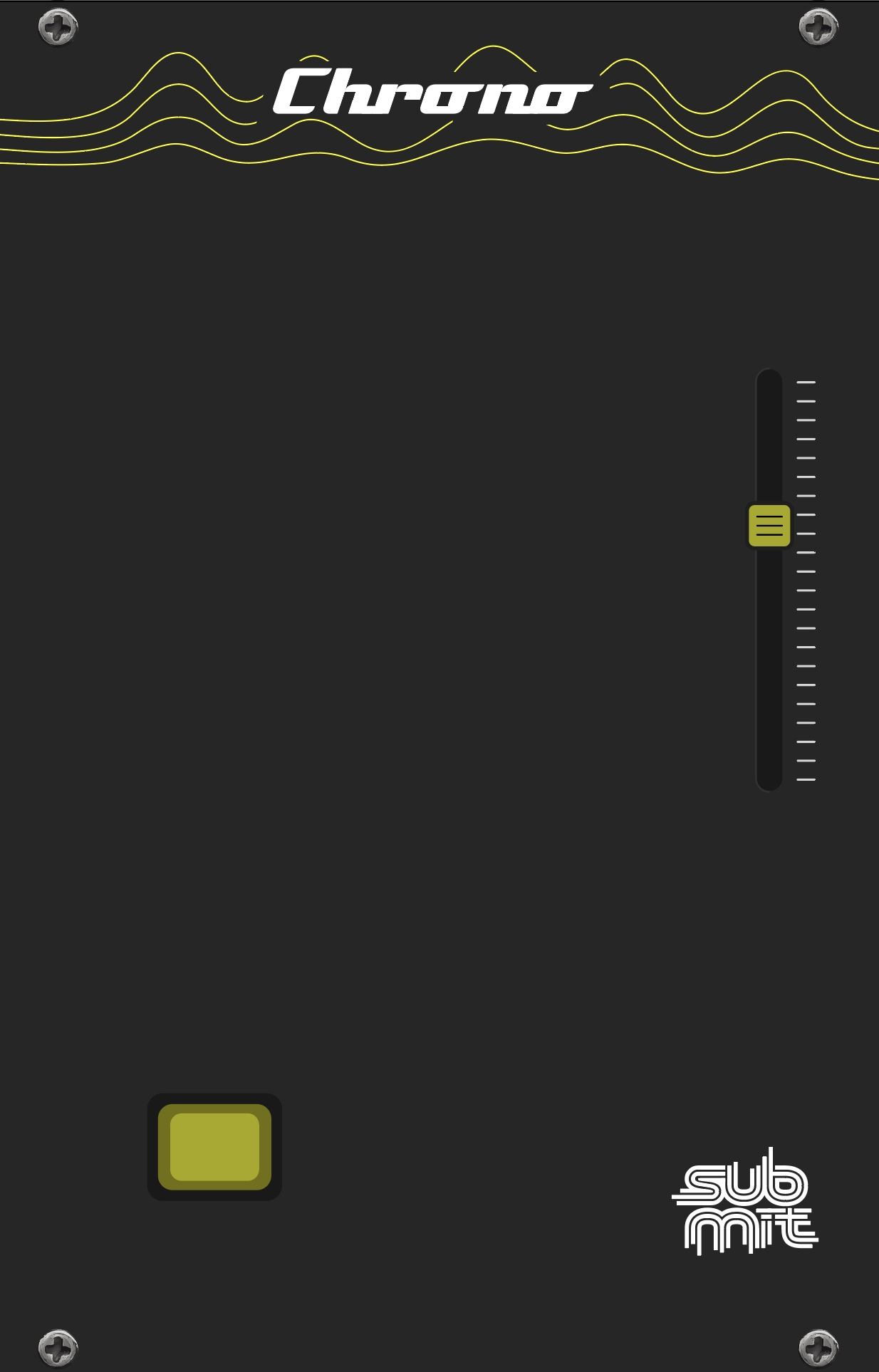
I’ve also started working on the panel design — this is just the first step and it’s definitely not finished yet, but the direction is starting to take shape.
Still early days, but it’s already becoming something I’d actually use myself… which is always a good sign.
Ported Mystic Circuits IDUM. Not too sure about module name yet, kind of rolling my eyes at the current one haha, so ideas are welcome (AI’s does suck at coming up with names).
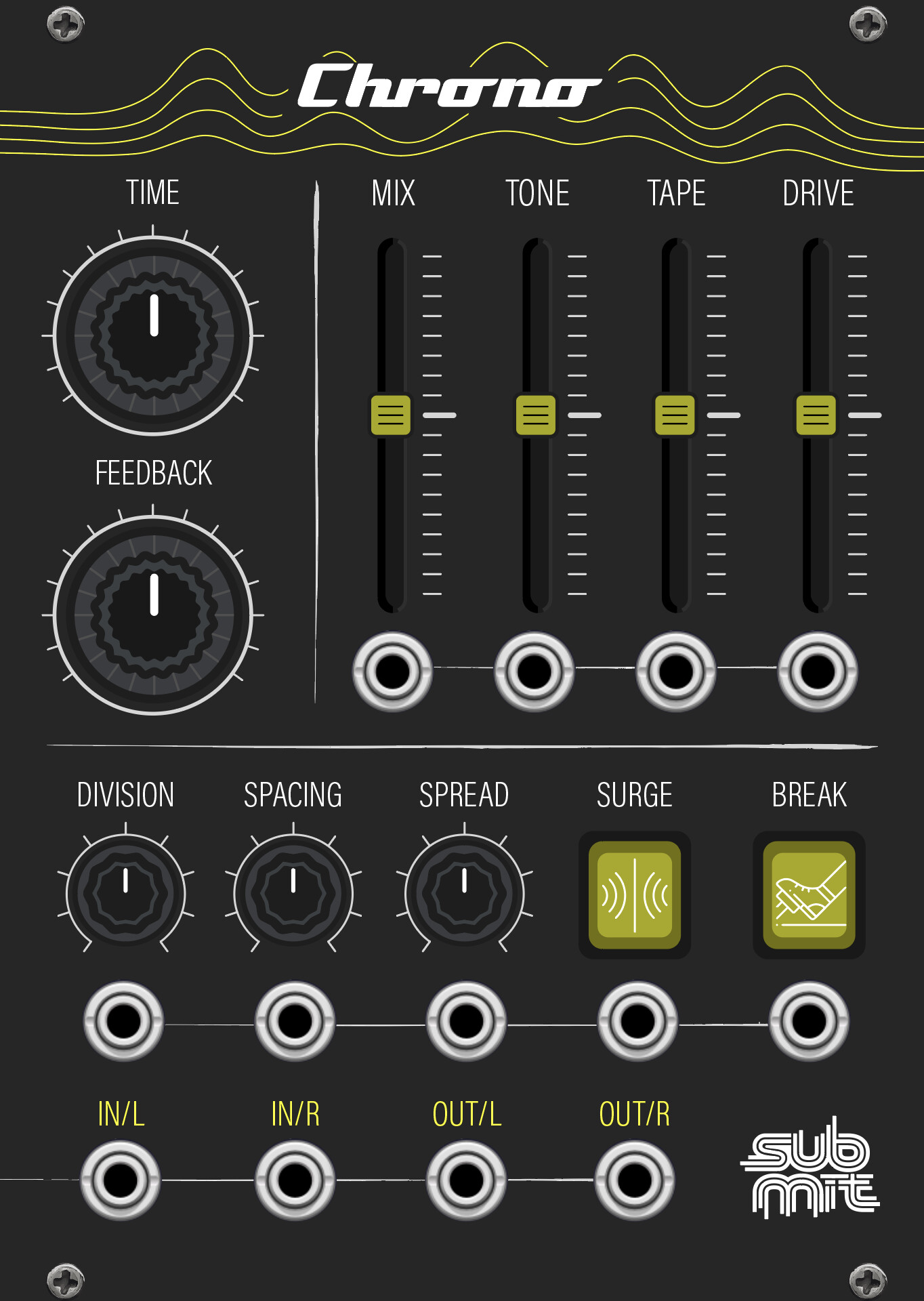
The design has evolved quite a bit since the first version. It’s starting to feel less like a concept and more like an actual instrument. The focus is still the same — a delay that feels alive — but now the controls and layout really support that idea.
The performance side is coming together, with momentary controls that push the delay into more expressive territory.
Still refining and testing, but it’s getting closer to the point where everything clicks.
Porting viznutcracker, sweet! from Ornament & Crime, this is by far the best ByteBeat Generator imo. I’ll see if i can expand upon it too in some interesting ways.
Hey everyone,
I’m currently finishing up Chrono, a new delay module for VCV Rack that I plan to release as a first public beta next week.
Chrono is not just another delay — it’s designed as a tape time machine. The idea is that you use the delay not just as an effect, but as an instrument in its own right.
What makes Chrono different:
The module features a HEADS system with six combinations of three tape heads (ALL, TRP, DOT, QTR, DUB, SUB). Each position gives a different rhythmic character — from tight triplet feels to wide dotted note echoes, inspired by classic tape echo machines like the Roland Space Echo.
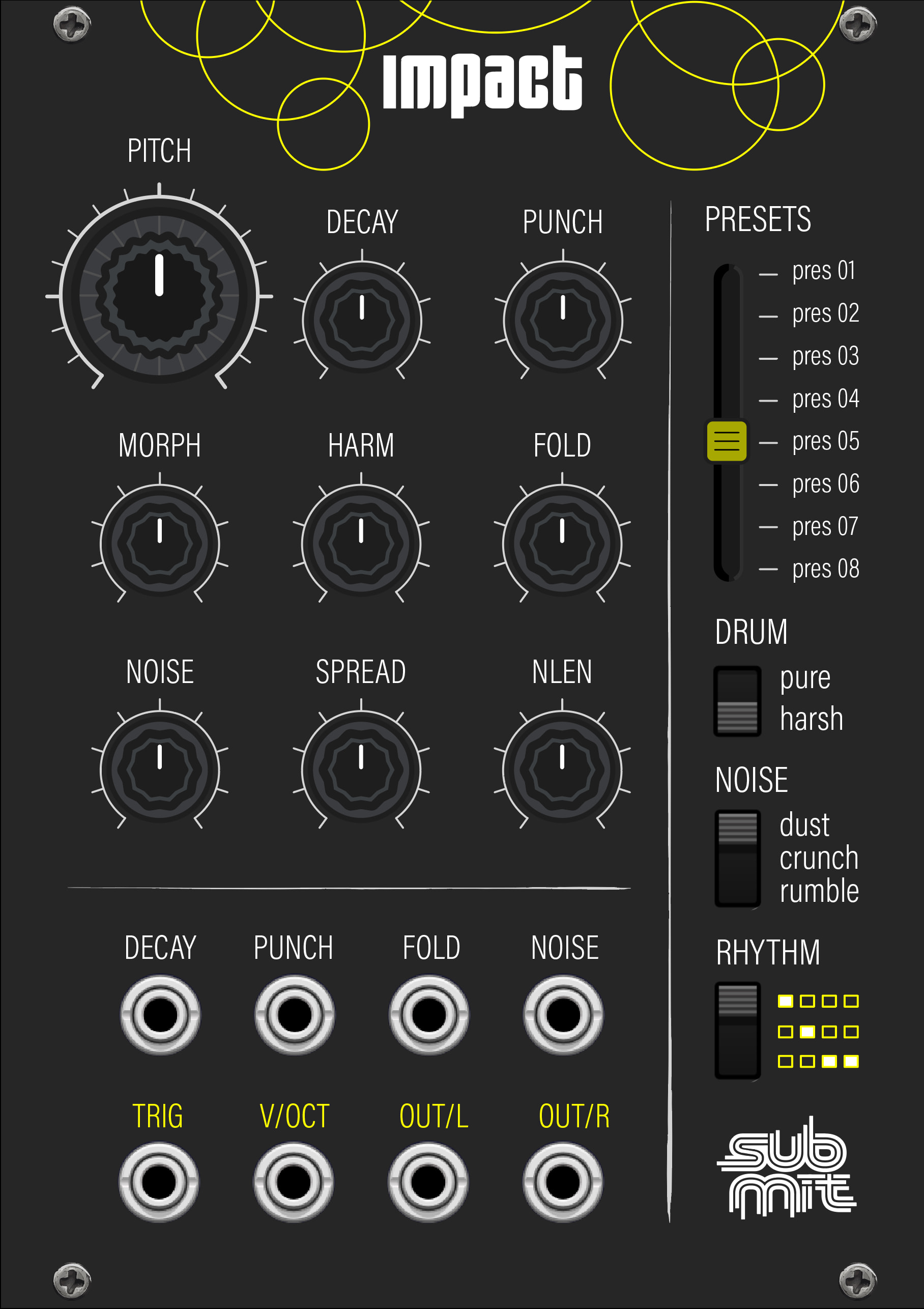
I’m also deep in development on a new module called Impact — a percussive kick synthesizer with a dirty, analog character. It features a 6-oscillator additive engine, a stereo noise layer with three different textures, rhythmic noise tracking, and a wavefolder at the core. It covers a wide range from clean sub kicks to chaotic industrial textures.
More details on Impact below. Looking forward to sharing both modules with the community soon!
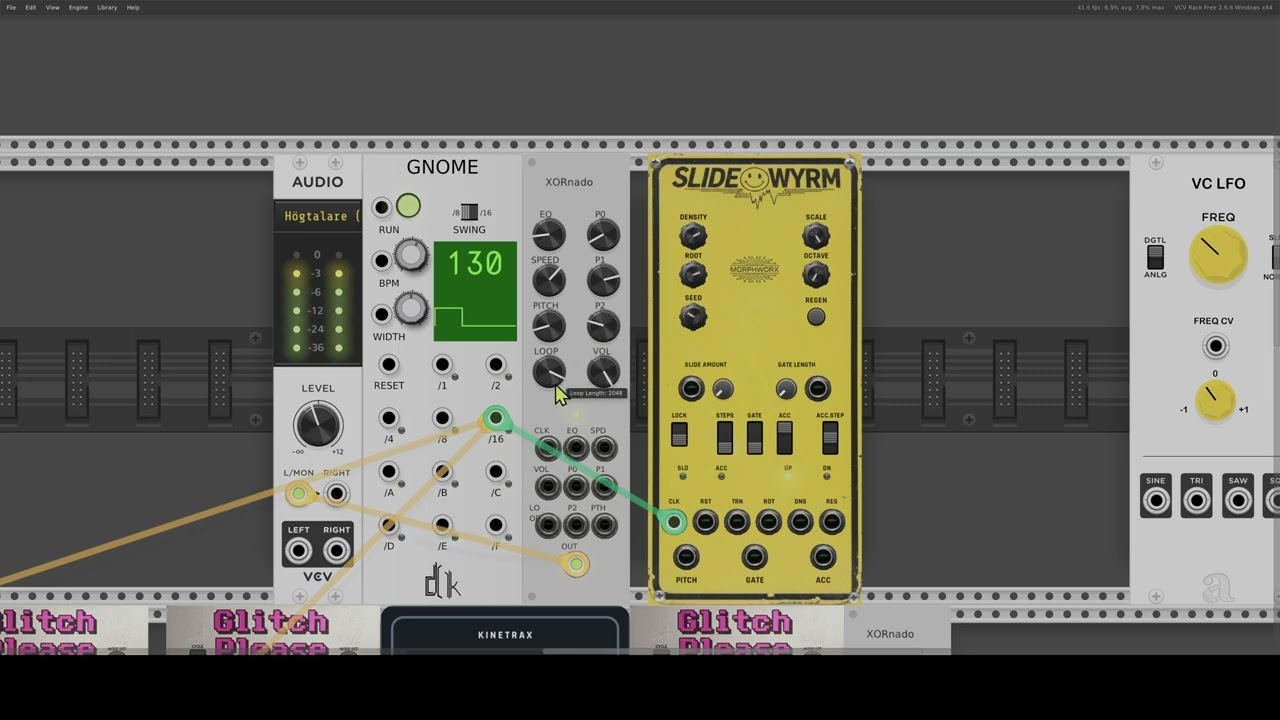
The Byte Beat generator is coming along great. It has substantial changes from the Viznutcracker, Sweet! applet on Ornament and Crime.
There are 2 more ways to change the sound, Pitch and Loop Length.
Instead of 16 Equations (algos) there are now 23 to chose from. So a far broader variety of sounds can be made.
A volume knob is also added which can go twice as loud as the original (depending on the knob settings volume can get very low sometimes, its why i added it).
Instead of 4 channels i made it 1 channel, this to get top-notch performance. If you need more, add more modules. Makes more sense than to have 3 unused channels perhaps.
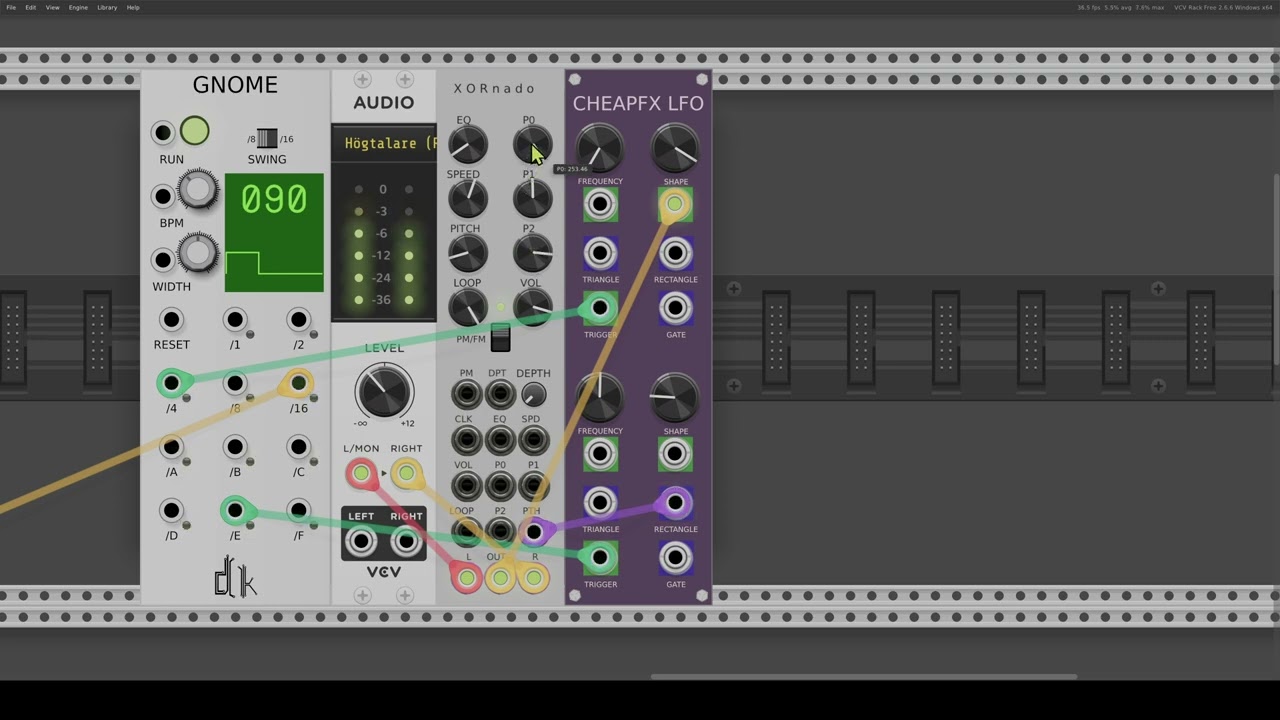
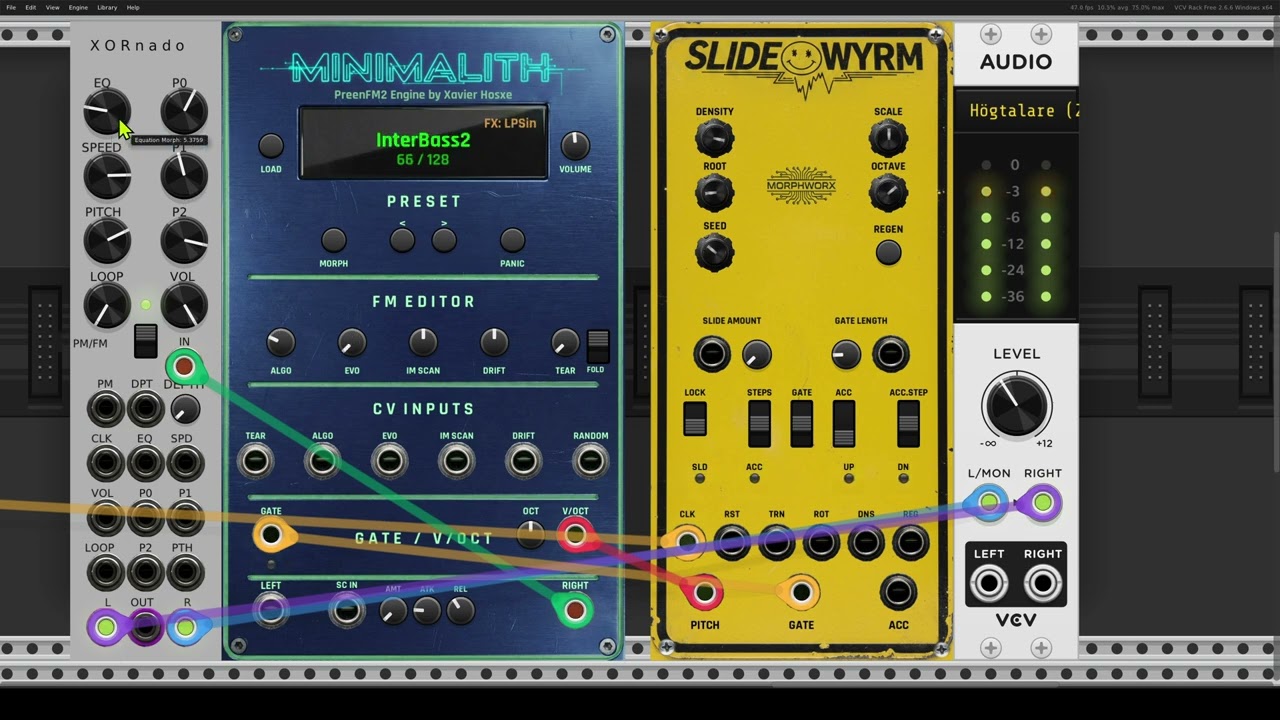
Added phase and fm modulation (via a 2-way switch) to XORnado, it has a depth control (so you can set it to 0 if you want). So an even crazier amount of sounds can now be had.
Instead of stepping through each Equation (the various sound algos) i made it crossface smoothly between them. I also added an optional way to use it in stereo for this, so L has one equation, R has the other.
One thing which is pretty cool is using this as a very strange stepped LFO, at speed=1–3 you’re firmly in LFO range.
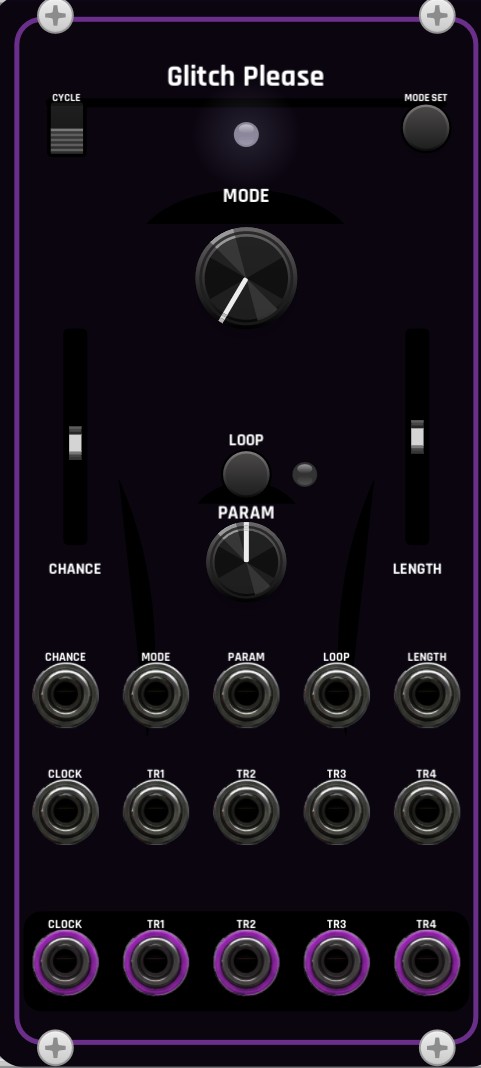
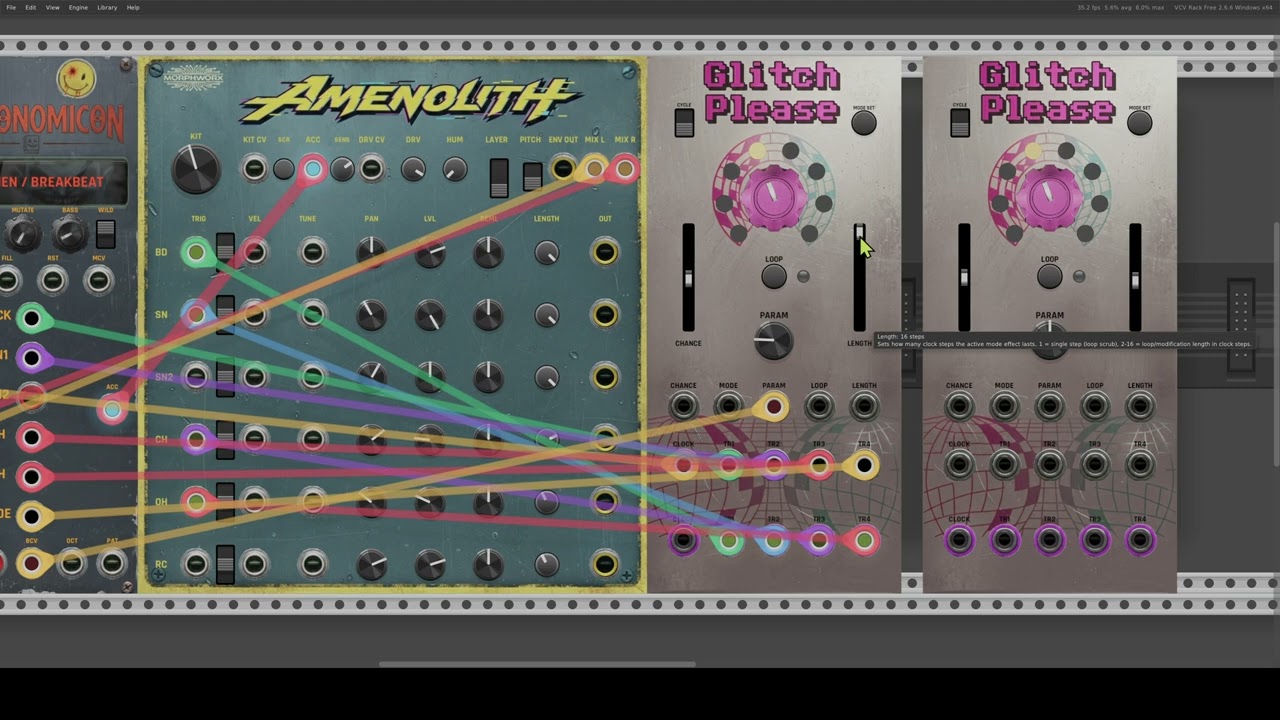
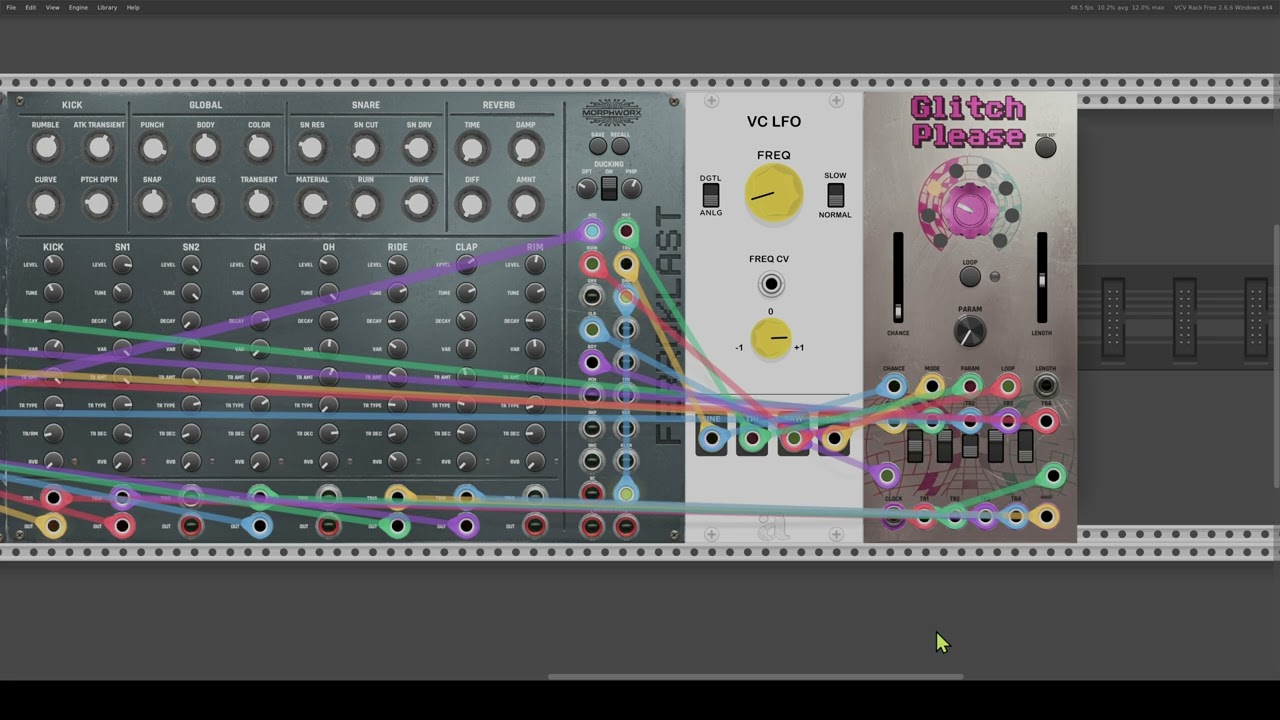
Finalizing Glitch Please (Mystic Circuits IDUM port).
I think i will leave out the SPLIT mode, i find that its a bit of a confusing mode to keep track of. One could always add an additional Glitch Please module if one or more modes is needed. That will be less confusing i think.
I added two new functions which isn’t in the original HW;
MERGE
A 3-way switch where you can select HOW the trigger out behaves;
ADD (keeps incoming triggers, adds the new triggers)
CUT (a subtractive mode with less trigger outs)
REPLACE (original behavior)
GHOST Trigger out
This adds a ghost trigger, how it is added is determined via a 3-way switch.
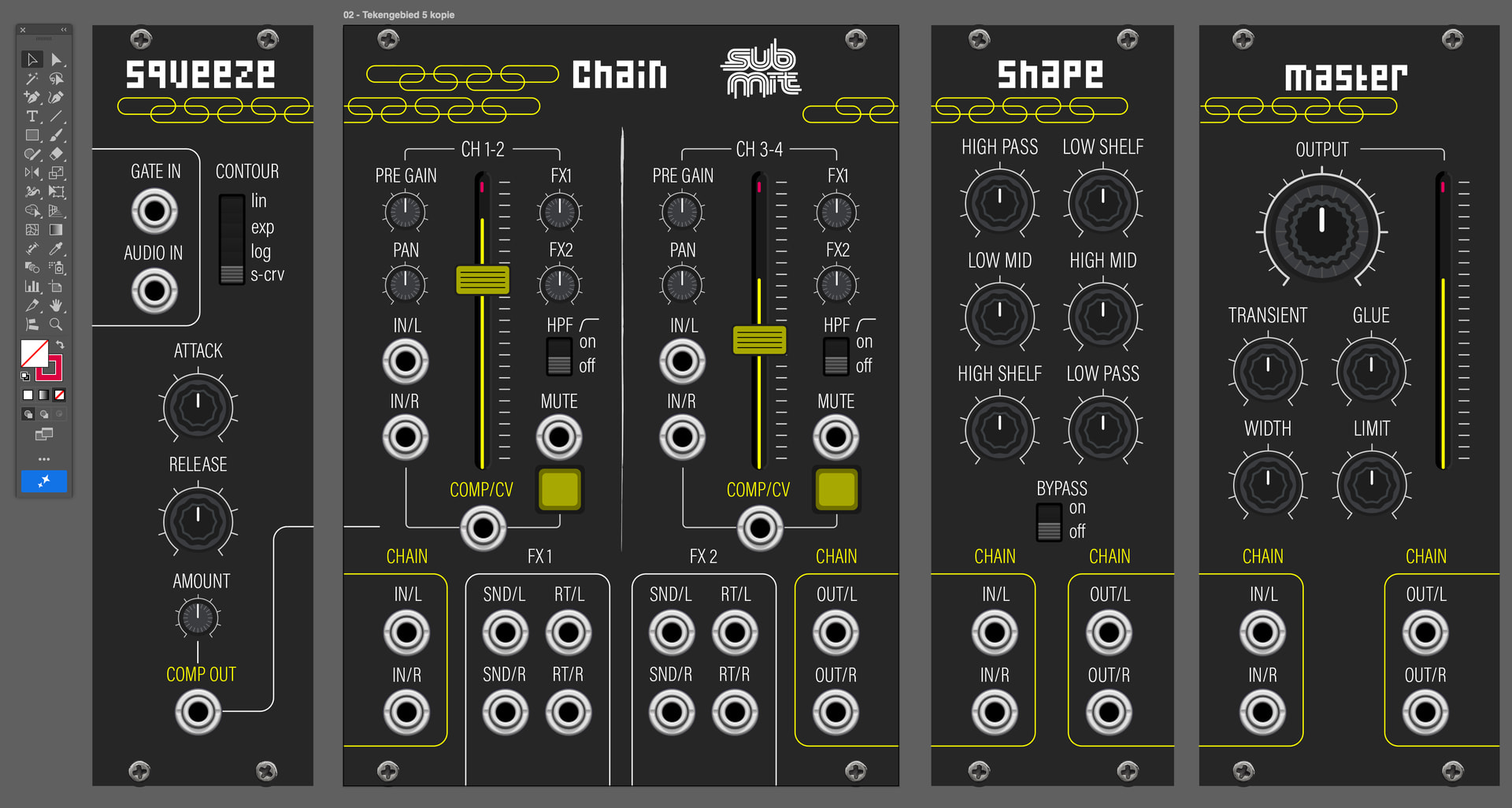
Working on a new mixer module family for Submit
After using the 4ms MetaModule for a while, I found myself missing a mixer that works the way I think. So I started building one, designed specifically for the MetaModule, with VCV Rack support as well.
The idea is simple: chainable stereo mixer modules that scale with your patch. Need 4 channels? Use two. Need 8? The 4ms MetaModule recently added support for multiple cables per port, which opens up a lot of new possibilities. This mixer takes full advantage of that, making it easy to send multiple channels to a shared FX.
Chain the core mixer module
2 stereo channels (mono normalled)
Pre-gain per channel
Volume fader with VU indicator
Pan per channel
2x FX send per channel
HPF (low cut) per channel
Mute per channel with CV input
COMP/CV insert per channel
Chain in/out for linking multiple modules
Stereo FX send/return
Squeeze sidechain compressor insert
Gate or audio input (switchable)
Threshold, ratio, attack, release
Connects to COMP/CV jack
Shape EQ/filter insert
Connects via chain in/out
Master intelligent output processor
Transient shaper, compressor, limiter
Final stage of the chain
Designed with the 4ms MetaModule in mind, compact, efficient and minimal CPU usage.
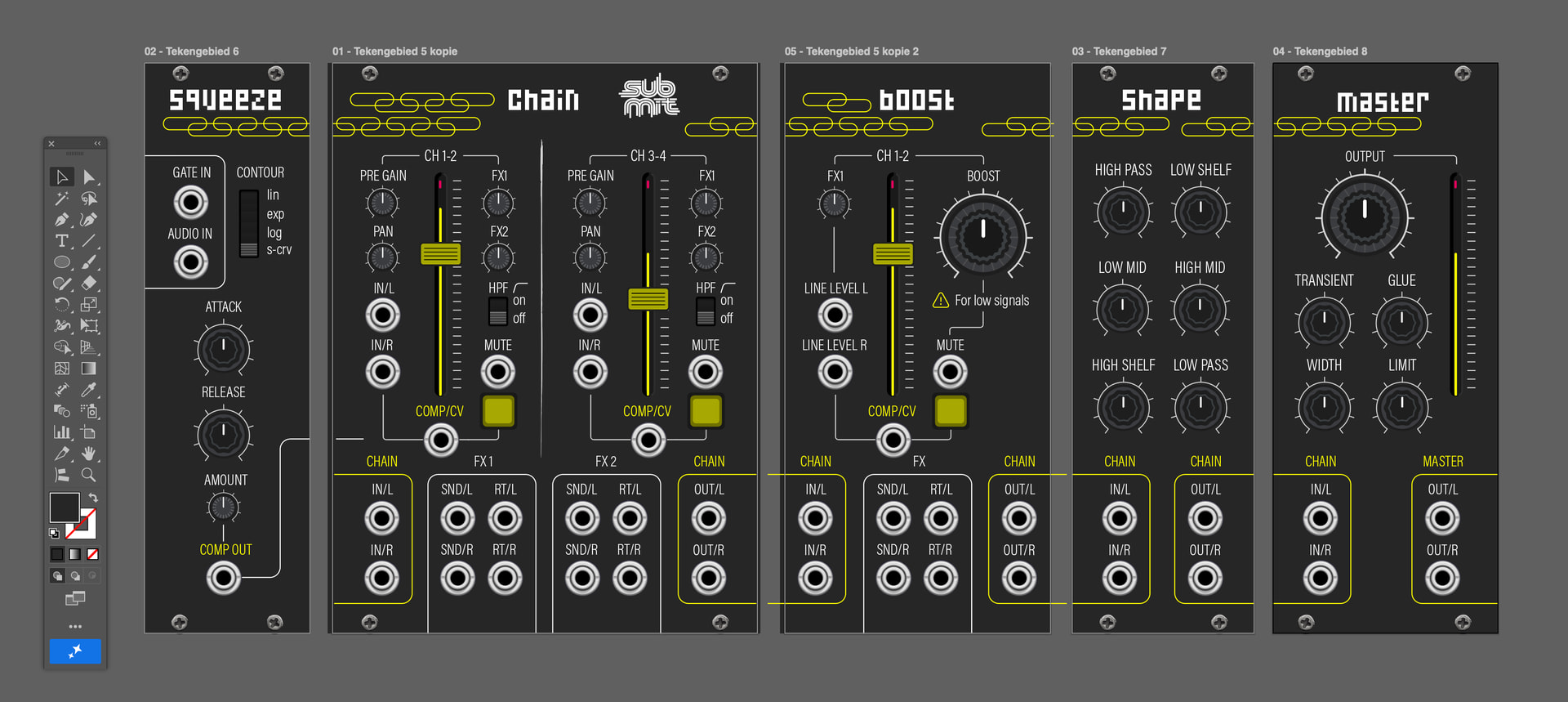
Boost, the missing link in the Submit chain
The Submit mixer chain is now complete with Boost. Designed specifically for line level and low signals that need to be brought up to modular level, something that’s especially useful on the MetaModule where line inputs can be much lower than expected.
Boost fits right into the Chain ecosystem: stereo input, FX send/return, COMP/CV sidechain insert, mute, and chain in/out, just like its brothers Chain, Shape and Master.
Patch them together or use them standalone. Built for live performance.
(Yes, the screws fell out. We’ll fix that in the next update.)
Next week: all modules including Boost will be ported to the MetaModule as a beta release. Stay tuned!
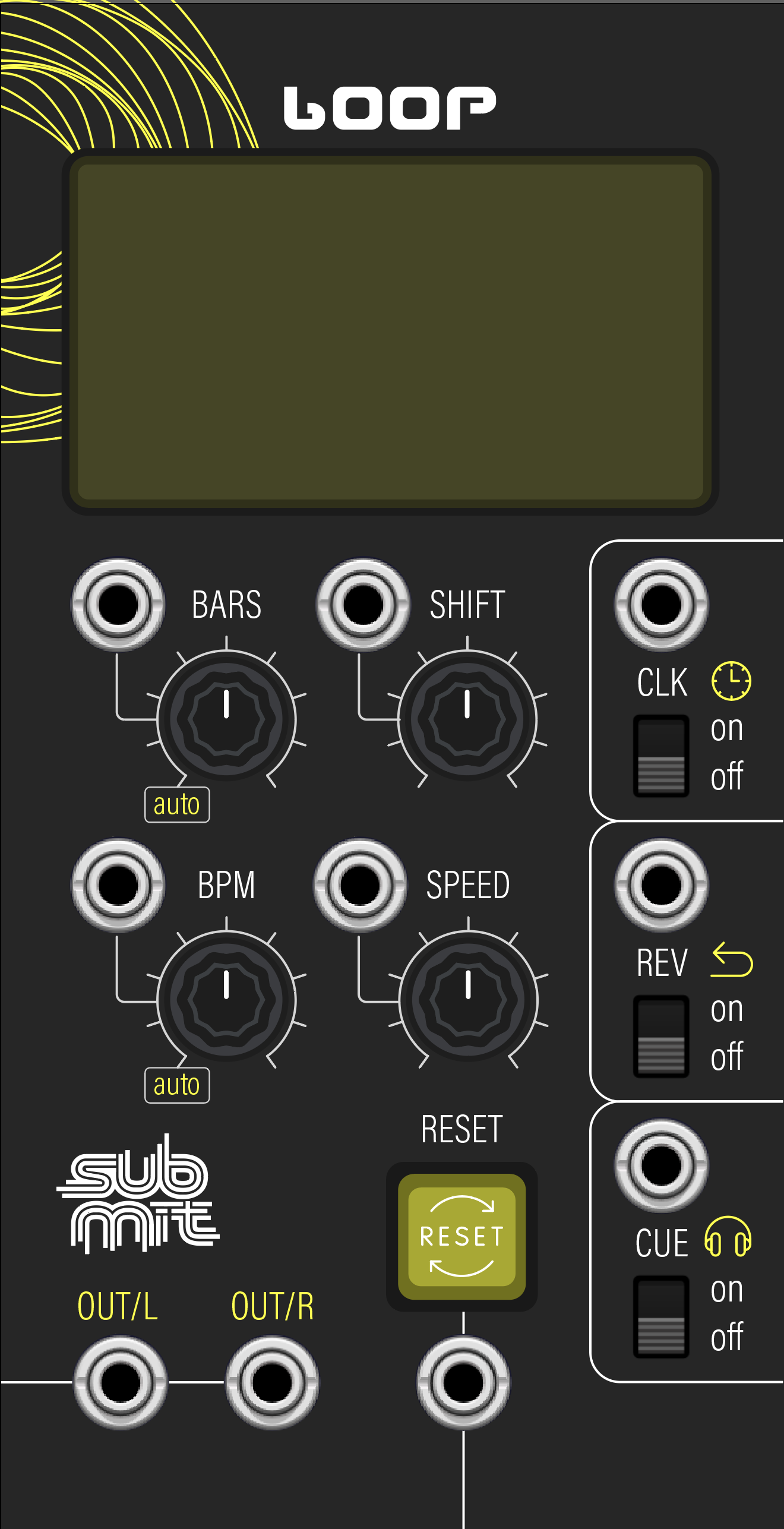
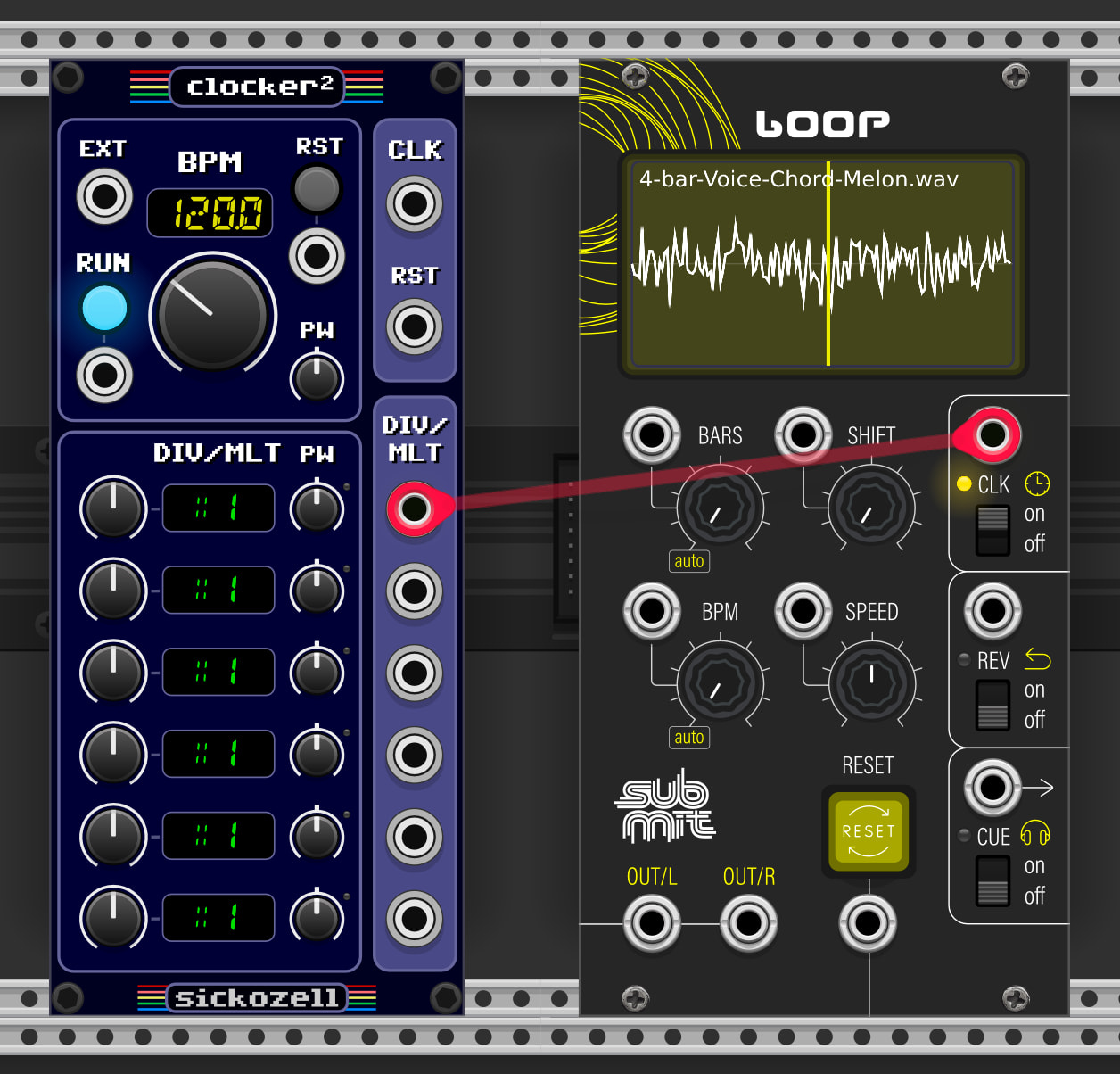
I’ve been working on a new module called Loop, a clock-synced sample looper designed for live performance.
What makes it interesting is that it automatically reads the BPM from the filename of your WAV file (e.g. 120bpm-myloop.wav) and calculates the bar length from there. When you plug in a clock, it adjusts the playback speed to stay perfectly in sync no manual BPM entry needed.
For live use it has a CUE/LIVE switch with fade in/out, so you can preview a sample on your headphones before sending it to the main outputs. There’s also a bar shift function that lets you jump to a different section of the sample quantized to the end of the loop so it always lands cleanly on the beat.
Still in beta but working well. Looking forward to eventually porting it to MetaModule too!